
The R-22 Phase-Out: What Caribbean Homeowners and Technicians Need to Know
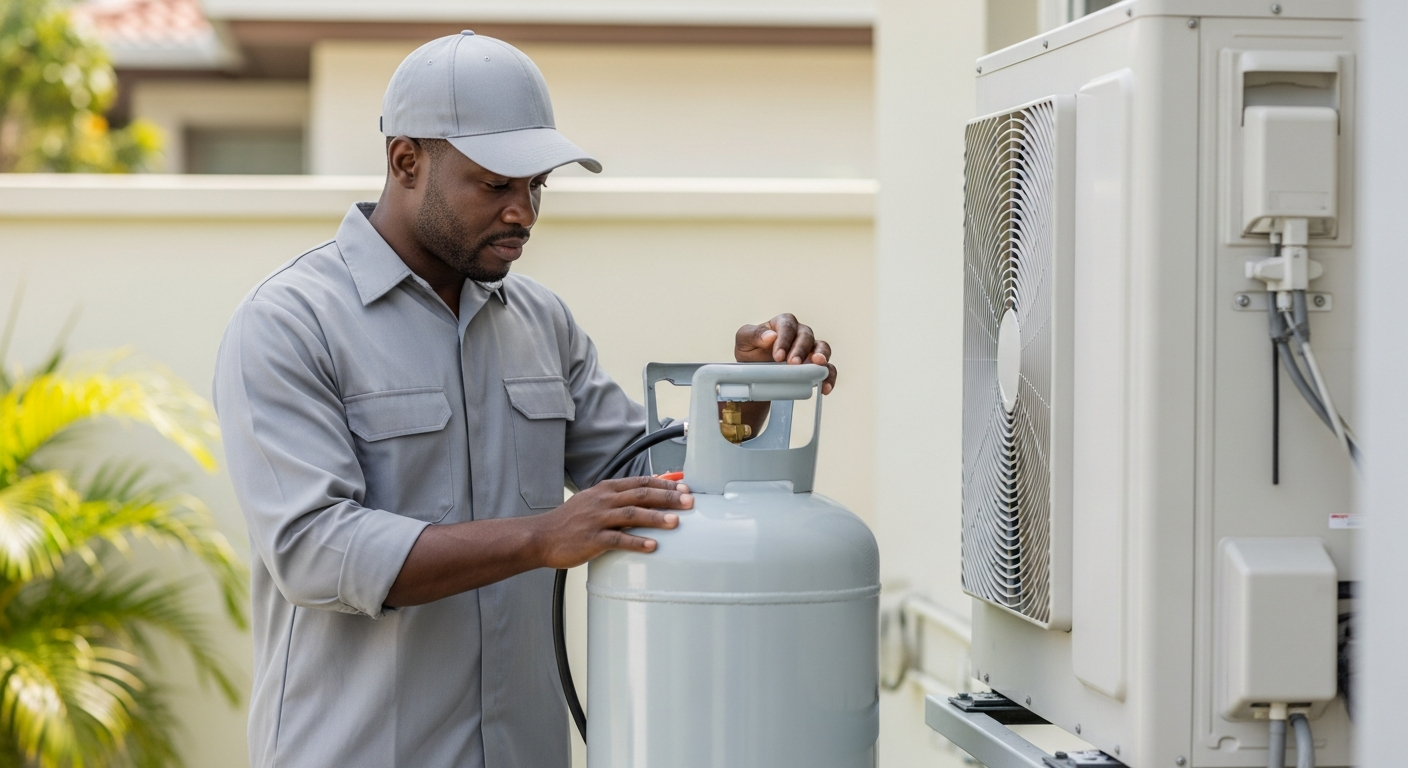
If your air conditioning system was installed before 2015, there's a good chance it runs on R-22 refrigerant (also known as HCFC-22 or by the brand name Freon). And if it does, you need to be aware of a significant change that's affecting the cost and availability of this refrigerant across the Caribbean and the world.
R-22 is being phased out under the Montreal Protocol due to its ozone-depleting properties. This isn't a future event — it's happening now, and it directly impacts every R-22 system still in operation.
What's Actually Happening
The Montreal Protocol, which Trinidad and Tobago and virtually all Caribbean nations have signed, mandates the phase-out of HCFC refrigerants including R-22. The timeline has been progressing in stages:
- Production and import of new R-22 has been severely restricted and is declining to zero.
- Only recycled or reclaimed R-22 remains available in most markets.
- Supply is tightening year by year, and prices are rising accordingly.
What this means in practical terms: R-22 is becoming scarce and expensive. The 50-lb cylinder that cost a fraction of what it does today a few years ago has seen substantial price increases, and this trend will continue as supply dwindles.
What This Means for Your System
If Your System Uses R-22 and Is Working Fine
You don't need to panic. There's no law requiring you to remove a working R-22 system. You can continue to operate it as long as it functions. The issue arises when:
- You develop a refrigerant leak and need to top up — R-22 will be increasingly expensive and potentially unavailable.
- Your compressor fails and needs replacement — finding an R-22 compressor becomes harder every year.
- A major component fails — at some point, the repair cost of an R-22 system exceeds the cost of replacing it with a modern unit.
If Your System Uses R-22 and Needs Repair
This is where the decision gets critical. Before approving an expensive repair on an R-22 system, consider:
- Age of the system — if it's 12+ years old, you're likely approaching the end of its efficient lifespan regardless of the refrigerant issue.
- Cost of the repair vs. replacement — if the repair costs more than 40–50% of a new system, replacement is almost certainly the better investment.
- Future repair likelihood — older systems tend to have cascading failures. Fixing one component often reveals or causes problems in the next.
Your Options
Option 1: Replace the System (Recommended for Most)
For systems that are 10+ years old, or that need a major repair (compressor, condenser coil, etc.), replacing with a new R-410A system is usually the best long-term decision.
Benefits:
- Modern efficiency — a new inverter unit using R-410A will consume 30–50% less electricity than your old R-22 system. In the Caribbean, where AC runs year-round, the energy savings alone can pay for the new system within a few years.
- No refrigerant availability concerns — R-410A is the current standard and is widely available and competitively priced.
- Better humidity control — modern systems manage Caribbean humidity far more effectively than older designs.
- Warranty coverage — new equipment comes with manufacturer warranties. Your 15-year-old R-22 unit has none.
We carry R-410A systems from LG, Gree, Coldwave, and Carrier across all residential and commercial capacities.
Option 2: Drop-In Refrigerant Alternatives
Several refrigerant blends have been developed as "drop-in" or "near-drop-in" replacements for R-22, meaning they can be used in existing R-22 equipment with minimal or no modifications. These include:
- R-407C — one of the most common R-22 alternatives. Requires a lubricant change from mineral oil to POE (polyolester) oil. Not a true drop-in but widely used as a retrofit option.
- R-425A — designed as a closer drop-in for R-22 in certain applications.
- R-406A — another R-22 alternative available in our inventory.
Important cautions about drop-in refrigerants:
- Cooling capacity may differ from R-22 — your system may cool slightly less effectively.
- Operating pressures differ — some alternative refrigerants run at higher pressures, which may stress older components.
- Lubricant compatibility must be addressed — mixing the wrong oil with the wrong refrigerant damages compressors.
- Not all manufacturers approve retrofitting their equipment — this may void any remaining warranty.
Drop-in alternatives are best viewed as a bridge solution — extending the useful life of a system that's otherwise in good condition while you plan for eventual replacement.
Option 3: Continue with R-22 (Short-Term Only)
If your system is working well and doesn't have a leak, you can continue to operate it with its existing R-22 charge. No refrigerant is consumed during normal operation — it circulates in a sealed system. You only need additional refrigerant if there's a leak.
We still stock R-22 refrigerant and will continue to carry it while supply allows. However, we can't guarantee long-term availability or pricing stability, as these are subject to global supply constraints.
For HVAC Technicians: Managing the Transition
If you're servicing R-22 systems, here are practical considerations:
- Advise customers proactively. When you service an R-22 system, inform the customer about the phase-out. They should know before an emergency repair forces a rushed decision.
- Stock transitional refrigerants. Having R-407C and other alternatives on hand lets you offer customers options when their R-22 system needs refrigerant.
- Recover and reclaim. Recovered R-22 is increasingly valuable. Proper recovery during system decommissioning is both environmentally responsible and economically sensible.
- Build R-410A expertise. If you haven't already, invest in training and tools for R-410A systems. These require different handling — higher pressures, different oil types, and specific service equipment.
What We Carry
Servair stocks a complete range of refrigerants to support systems in any phase of this transition:
- R-22 — while supplies last, for maintenance of existing systems
- R-410A — the current standard for new residential and light commercial systems
- R-407C, R-406A, R-425A — transition alternatives for R-22 retrofit projects
- R-134A, R-404A, R-507C — for refrigeration applications
We also carry the compressors, expansion valves, filter driers, and controls needed for both new R-410A installations and R-22 system retrofits.
Questions about your R-22 system? Need refrigerant or planning a system upgrade? Contact Servair at 1 (868) 658-1910 or WhatsApp 1 (868) 374-7295. We'll help you navigate the transition.