
Indoor Air Quality in the Tropics: Why Your AC System Is Your First Line of Defence
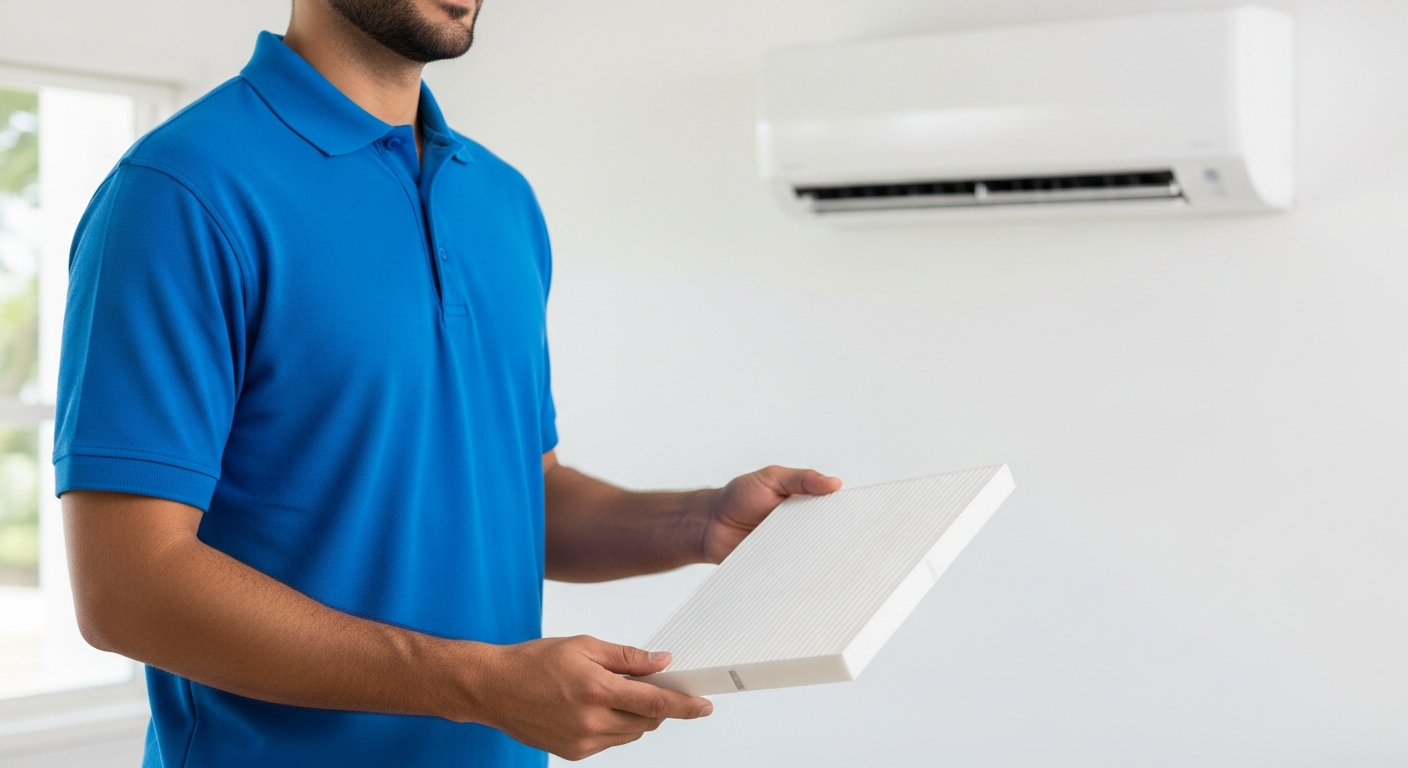
When people think about air conditioning, they think about temperature. But in the Caribbean, your AC system does something equally important that most people never consider: it controls the quality of the air you breathe indoors.
In a tropical climate where we spend the vast majority of our time in air-conditioned spaces — homes, offices, cars, malls — the quality of that indoor air has a direct impact on health, comfort, and productivity. And the state of your AC system is the single biggest factor determining whether that air is clean or contaminated.
What Makes Tropical Indoor Air Different
The Caribbean climate creates a perfect environment for indoor air quality problems that simply don't exist at the same scale in drier, cooler climates:
Humidity and Mould
Mould needs two things to thrive: moisture and organic material. The Caribbean provides both in abundance. Indoor relative humidity above 60% — common in any space without properly functioning AC — creates conditions where mould colonies can establish and spread on walls, furniture, ductwork, and inside AC units themselves.
The health impacts are well-documented: respiratory irritation, allergic reactions, asthma exacerbation, and in cases of prolonged exposure to certain mould species, more serious respiratory conditions. Children and the elderly are particularly vulnerable.
Biological Growth in AC Systems
Your air conditioning system moves air through dark, cool, moist spaces — the evaporator coil, the drain pan, and the ductwork. These are ideal conditions for biological growth. Without regular maintenance, your AC system doesn't just fail to clean the air; it actively distributes contaminants throughout your space every time it runs.
Outdoor Pollutants Coming In
Caribbean air, while generally cleaner than heavily industrialised regions, carries its own pollutant load: Saharan dust events (increasingly common), pollen from tropical vegetation, construction dust, vehicle emissions in urban areas, and sea salt particles. Your AC system's filtration is the barrier between these outdoor pollutants and your lungs.
How Your AC System Controls Air Quality
Humidity Removal
A properly sized and maintained air conditioner removes moisture as a natural part of the cooling process. As warm, humid air passes over the cold evaporator coil, water vapour condenses and drains away. A well-functioning system maintains indoor humidity between 40% and 55% — the sweet spot where comfort is high and mould growth is inhibited.
This is why an oversized AC unit can actually create air quality problems. An overpowered unit cools the air quickly and shuts off before it has removed enough moisture, leaving you with cold but damp air. Proper sizing (covered in our AC buying guide) is essential for humidity control.
Filtration
Every air conditioning system includes at least a basic filter. But the quality of that filtration varies enormously:
- Standard mesh filters catch large dust particles but do little for mould spores, fine dust, or allergens.
- Pleated filters offer better filtration for smaller particles.
- HEPA-grade filters capture 99.97% of particles down to 0.3 microns — including mould spores, fine dust, and many bacteria.
We stock replacement filters across all grades, including pleated and HEPA options compatible with most residential and commercial systems.
UV-C Disinfection
For spaces where air quality is critical — medical offices, nurseries, homes with immunocompromised residents — UV-C lamps installed within the AC system provide an additional layer of protection. UV-C light destroys the DNA of mould, bacteria, and viruses as air passes through the system. We carry UV-C disinfection systems that can be retrofitted into existing ductwork.
Duct Cleaning: The Step Most People Skip
Your ductwork is the circulatory system of your building's air. Over time, it accumulates dust, mould, debris, and biological growth — especially in the Caribbean's humid conditions. Every time your AC runs, air passes through this contaminated ductwork and carries those contaminants into your living or working space.
Servair is proud to be a NADCA (National Air Duct Cleaners Association) member with NADCA-certified technicians. This matters because duct cleaning done incorrectly can actually make things worse — disturbing contaminants and spreading them more widely without properly removing them.
Professional duct cleaning following NADCA standards involves:
- Inspection with cameras to assess contamination levels
- Mechanical agitation to loosen deposits
- Negative pressure extraction to remove contaminants
- Treatment with antimicrobial agents where appropriate
- Post-cleaning verification
For most Caribbean homes and offices, professional duct cleaning every 2 to 3 years is recommended. Buildings near construction sites, coastal areas, or those housing sensitive populations may benefit from more frequent cleaning.
Standalone Air Purification
For additional protection beyond what your AC system provides, standalone air purifiers can make a meaningful difference — particularly in bedrooms, nurseries, and home offices where you spend concentrated periods.
We carry the LG PuriCare range, which combines HEPA filtration with additional technologies for comprehensive air cleaning. These units are particularly valuable in:
- Homes with allergy or asthma sufferers
- Bedrooms (where you spend 8 hours breathing the same air)
- Spaces that can't be adequately served by central AC filtration
- During Saharan dust events, when outdoor particulate levels spike
Simple Steps to Better Indoor Air
- Maintain your AC system. Clean or replace filters monthly. Have the system professionally serviced twice a year. This is the single most impactful thing you can do.
- Monitor humidity. A simple hygrometer (available for under TTD 100) tells you if your indoor humidity is in the safe range. If it's consistently above 60%, your AC system may need attention.
- Don't ignore musty smells. A musty odour from your AC vents is biological growth in your system. It won't go away on its own — it needs professional cleaning.
- Consider duct cleaning. If it's been more than 3 years, or if you've never had it done, schedule a professional duct cleaning.
- Ventilate when possible. Opening windows during cooler morning hours allows fresh air exchange, which even the best AC system can't fully replicate.
Concerned about your indoor air quality? Servair offers duct cleaning services, air filtration solutions, and maintenance across Trinidad and Tobago. Contact us at 1 (868) 658-1910 or WhatsApp 1 (868) 374-7295.