
10 Proven Ways to Cut Your AC Electricity Bill in the Caribbean
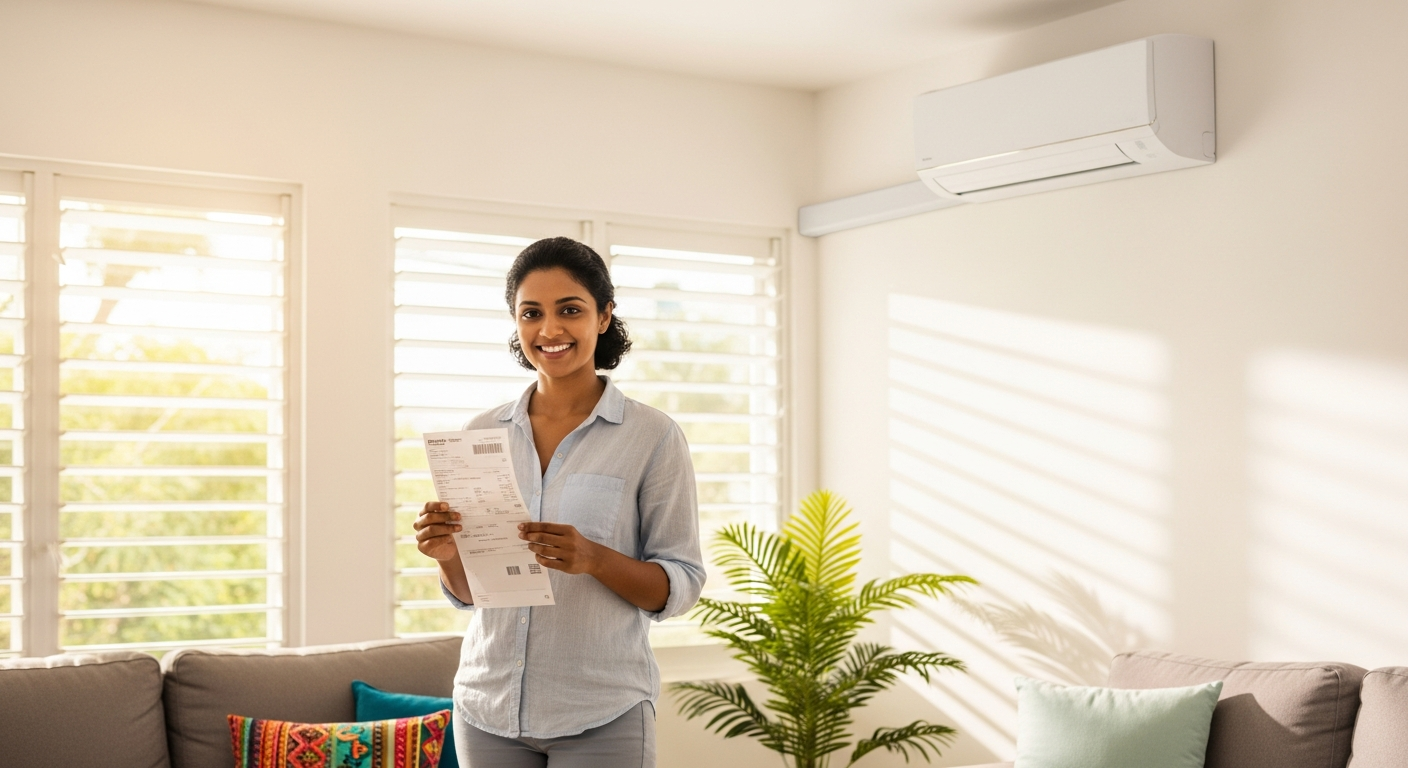
In Trinidad and across the Caribbean, air conditioning can account for 50% to 70% of your total electricity bill. When you're running AC year-round in a tropical climate, even small efficiency improvements translate into significant savings over 12 months.
These aren't theoretical suggestions — they're practical, proven strategies that we've seen make real differences for homeowners and businesses across the region. Some cost nothing. Others require a modest investment that pays for itself quickly.
1. Set Your Thermostat to 24°C, Not 18°C
This is the simplest change and often the most impactful. Many people set their AC to the lowest possible temperature, thinking it will cool the room faster. It doesn't — your AC delivers the same cooling rate regardless of where you set the thermostat. A lower setting just means the system runs longer.
Every degree below 24°C increases energy consumption by approximately 3–5%. Setting your thermostat to 18°C instead of 24°C can cost you 20–30% more electricity with minimal comfort benefit. Most people find 24°C perfectly comfortable once humidity is controlled — and your AC handles humidity best when it's running at moderate load, not maximum blast.
2. Clean or Replace Filters Monthly
A clogged filter restricts airflow, forcing your system to work harder and run longer. In the Caribbean's dusty conditions, filters accumulate debris faster than in cleaner environments. A dirty filter can increase your AC's energy consumption by 15–25%.
At a filter cost of TTD 30–80 (depending on the type), this is the highest-return maintenance investment you can make.
3. Keep Your Condenser Coils Clean
Your outdoor unit rejects heat through the condenser coils. When those coils are coated in dust, salt deposits, or grime — which happens quickly in the Caribbean — heat rejection efficiency drops and the compressor works harder. A professional condenser coil cleaning every 3–6 months can reduce your energy consumption by 10–15%.
Between professional cleanings, you can gently rinse the outdoor coils with a garden hose (water only, no pressure washer) to remove surface dust.
4. Upgrade to an Inverter Unit
If you're still running a non-inverter AC — especially if it's more than 8 years old — upgrading to a modern inverter unit is one of the biggest efficiency gains available. Inverter technology reduces energy consumption by 30–50% compared to equivalent non-inverter models.
In the Caribbean, where your unit runs 10+ hours daily year-round, the energy savings can recoup the higher purchase price in 2–3 years. After that, you're saving TTD 1,200–2,400 per year per unit.
We carry inverter models from LG, Gree, and Coldwave at various capacity levels. See our detailed comparison in our Inverter vs Non-Inverter guide.
5. Use Ceiling Fans with Your AC
A ceiling fan uses about 1/30th the energy of an air conditioner, but it makes the room feel 3–4°C cooler through the wind-chill effect. By running a ceiling fan alongside your AC, you can raise the thermostat setting by 2–3°C without any perceived comfort loss.
That 2–3°C thermostat increase translates to 6–15% lower AC energy consumption — far more than the ceiling fan uses.
6. Seal Air Leaks
Cold air escaping and hot air entering through gaps around doors, windows, and wall penetrations forces your AC to work overtime. Common leak points in Caribbean homes:
- Louvre windows — if you have louvre windows in air-conditioned rooms, they're allowing significant air exchange. Consider replacing them with sealed glass windows in rooms you cool regularly, or at minimum, install louvre seals.
- Door gaps — a 5mm gap under a door is equivalent to a hole the size of your fist in the wall. Door sweeps and weatherstripping are inexpensive and easy to install.
- Pipe and wire penetrations — anywhere pipes or cables pass through walls, there's often a gap that allows air exchange. Seal these with expanding foam or caulk.
Sealing these leaks can reduce your cooling load by 15–25%, depending on how leaky your space currently is.
7. Block Solar Heat Gain
In the Caribbean, solar radiation through windows is one of the largest contributors to your cooling load. Simple strategies to reduce it:
- Curtains or blinds on sun-facing windows — especially west-facing windows, which receive intense afternoon sun. Reflective or light-coloured window treatments are most effective.
- Window film — solar-control window film can reduce solar heat gain through glass by 40–70% while still allowing natural light. It's a one-time investment with immediate and ongoing energy savings.
- External shading — awnings, overhangs, or shade trees on the west and south sides of your building are the most effective solar heat blockers because they stop the heat before it reaches the glass.
8. Don't Cool Empty Rooms
It sounds obvious, but we see it constantly: air conditioning running in rooms nobody is using. If you have a split system, turn off units in unoccupied rooms. If you have a central system, close vents and doors to unused areas (though avoid closing more than 20% of vents, which can create pressure issues).
A programmable thermostat or timer can automate this — turning the system off or raising the set point during hours when a room is typically unoccupied, and cooling down before you return.
9. Maintain Your Refrigerant Charge
Low refrigerant — usually due to a slow leak — is one of the most common and most expensive efficiency problems. A system running 10% low on refrigerant can use 20% more energy while delivering less cooling. And unlike many other problems, low refrigerant doesn't set off alarms or obvious warnings. The room just gets a little warmer, and you turn the thermostat down to compensate, using even more energy.
An annual refrigerant check by a qualified technician is essential. If your system needs refrigerant added regularly (more than once every few years), there's a leak that should be found and repaired.
10. Install Surge Protection
This isn't strictly an energy-saving tip, but it protects the investment you've made in an efficient system. A single power surge can destroy an inverter board or compressor — wiping out the efficiency benefits of your modern unit and replacing them with the cost of an emergency repair.
A dedicated AC surge protector costs TTD 200–500. Replacing an inverter board costs TTD 2,000–4,000. The math is straightforward.
The Cumulative Effect
No single tip on this list will transform your electricity bill overnight. But combine several of them — clean filters, proper thermostat setting, sealed gaps, and a clean condenser — and you can realistically reduce your AC-related electricity costs by 30–40% with minimal investment.
For a household spending TTD 800 per month on electricity (with AC being 60% of that), a 35% reduction in AC costs saves roughly TTD 200 per month — TTD 2,400 per year. Over the life of your AC system, that's TTD 24,000 to 36,000 in savings.
Need energy-efficient AC equipment, replacement filters, or maintenance supplies? Visit servair.com or contact us at 1 (868) 658-1910. WhatsApp: 1 (868) 374-7295.