
Protecting Your Air Conditioning System Before, During, and After Hurricane Season
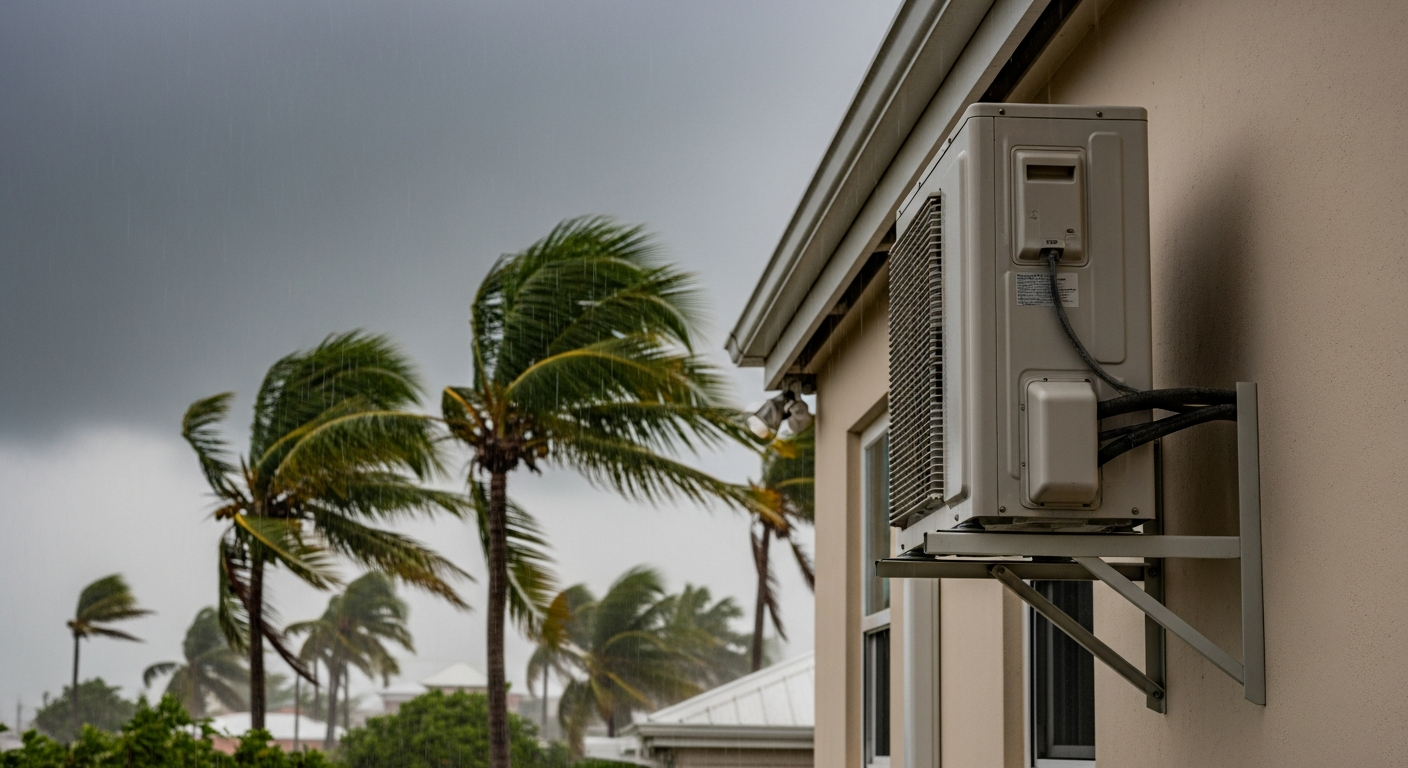
Caribbean hurricane season runs from June through November, and while we all know to stock up on water, batteries, and canned goods, most people don't think about their air conditioning system until after a storm passes and it won't turn on. By then, the damage is done — and you're joining a long queue of people all needing parts and service at the same time.
A little preparation goes a long way. Here's how to protect what is likely the most expensive appliance system in your home.
Before the Storm: Preparation Steps
Secure the Outdoor Unit
Your condenser unit is the most vulnerable component during a storm. It sits outdoors, exposed to wind, rain, and flying debris.
- Clear the area — remove any loose objects within 3 metres of the outdoor unit. Garden furniture, potted plants, tools, and loose building materials become projectiles in high winds.
- Consider a protective cover — if you have time and a storm is imminent, a heavy-duty tarpaulin secured with straps can provide some protection against debris impact. Do NOT use the cover during normal operation — only when the system is shut down before a storm.
- Check mounting bolts — ensure the condenser unit is securely bolted to its mounting pad or brackets. Vibration and age can loosen these over time.
- Document your equipment — photograph your outdoor unit, including the model and serial number plate. This is essential for insurance claims and parts ordering if damage occurs.
Turn Off the System Properly
Before a storm arrives:
- Turn off the AC at the thermostat or indoor unit.
- Switch off the circuit breaker dedicated to the AC system.
- If your area is prone to flooding, and the electrical disconnect is at ground level, consider having an electrician relocate it higher.
Turning off the breaker protects the system from power surges when electricity is restored after a storm — one of the most common causes of post-hurricane AC failures.
Invest in Surge Protection
If you haven't already installed a whole-house surge protector or at minimum an AC-specific surge protector, hurricane season is the strongest argument for doing so. Post-storm power restoration often comes with voltage spikes that can destroy compressors, inverter boards, and control electronics in seconds.
We stock voltage and phase monitors from ICM Controls and other manufacturers that provide this critical protection. The cost of a surge protector is a tiny fraction of replacing a fried inverter board or compressor.
During the Storm
Your AC system should remain off for the entire duration of the storm event. Even if power remains on during the storm, running the system while debris is hitting the condenser or while flooding is occurring can cause catastrophic damage.
If flooding reaches your outdoor unit, the system absolutely must not be energised until a qualified technician has inspected it.
After the Storm: What to Check Before Turning It Back On
This is where most people make mistakes. The power comes back, it's hot, and the instinct is to immediately turn on the AC. Resist that urge. A few minutes of inspection can prevent turning a minor issue into a major repair.
Visual Inspection Checklist
- Outdoor unit physical damage — look for dents in the cabinet, bent condenser fins, debris lodged in the unit, or displacement from the mounting.
- Refrigerant lines — check that the copper lines connecting the indoor and outdoor units are intact. Look for kinks, cracks, or disconnections.
- Electrical connections — visually inspect the disconnect box and any visible wiring for water damage, corrosion, or physical damage. Do NOT touch or test anything if you see water in electrical components.
- Drainage — ensure the condensate drain line is clear and the area around the outdoor unit is not flooded or waterlogged.
- Condenser fin condition — bent fins restrict airflow but are usually straightforward to repair with a fin comb. Heavily damaged fins may need coil replacement.
When to Call a Professional
Do NOT attempt to restart your system if:
- The outdoor unit was submerged or partially flooded
- You see any damage to refrigerant lines
- There's visible electrical damage or water in electrical components
- The outdoor unit has been displaced from its mounting
- You hear unusual sounds when the system starts
- The system trips the breaker when you try to turn it on
Restarting the System Safely
If the visual inspection looks good:
- Clean any debris from around and inside (accessible areas of) the outdoor unit.
- Turn on the circuit breaker and wait at least 30 minutes before turning on the AC. This allows the compressor's crankcase heater to warm the oil — cold-starting a compressor with liquid refrigerant in the crankcase can cause immediate mechanical damage.
- Set the thermostat to a moderate temperature and listen for unusual sounds.
- Check that both indoor and outdoor units are operating normally — indoor unit blowing cold air, outdoor fan running, no unusual vibrations or noises.
Common Post-Storm AC Problems
| Problem | Likely Cause | Parts Typically Needed |
|---|---|---|
| System won't start | Surge damage to control board or contactor | PCB assembly, contactor, capacitor |
| Running but not cooling | Refrigerant leak from line damage | Refrigerant, line repair materials |
| Unusual noise from outdoor unit | Bent fan blade, debris in unit, loose mounting | Fan blade, motor bearings |
| Water leaking indoors | Clogged drain line from debris | Drain line flushing (no parts usually needed) |
| Breaker trips when AC starts | Electrical short from water damage | Professional diagnosis needed — multiple components possible |
Be Prepared: Stock Up Before the Season
After a major storm, demand for AC parts and service spikes across the region. Technicians are booked for weeks, and common parts can sell out. If you're an HVAC contractor, stocking up on the most commonly needed post-storm components before hurricane season starts is just good business.
Commonly needed post-storm parts we recommend keeping on hand:
- Contactors and capacitors (multiple sizes)
- Circuit boards for common residential units
- Compressor hard-start kits
- Surge protectors and voltage monitors
- Refrigerant (R-410A and R-22)
- Condensate drain line supplies
Preparing for hurricane season? Browse our parts inventory or contact us at 1 (868) 658-1910. We stock surge protectors, replacement components, and everything you need to protect and repair your AC system.